Future of Output Devices Amazing Trends You Can’t Ignore
Published: 2 Mar 2026
Have you ever wondered why your phone screen feels limited when you compare it to new mixed‑reality displays? Many people are unsure about what comes next, and I’ve seen this confusion firsthand.
Over the years, I have tested many devices, from basic monitors to advanced VR headsets, and I can confidently say that output devices are moving beyond simple screens and speakers into immersive experiences that change how we live, work, and even learn.
In this article, we have covered the latest trends, upcoming technologies, and expert insights to help you understand the future of output devices and how you can benefit from these changes today.
Evolution of Output Devices (Past → Present → Future)
Guys, before we explore the newest innovations, it’s exciting to see how output devices have developed over time. From early monitors and printers to today’s advanced screens and immersive VR systems, each stage has changed the way we interact with computers.
Let’s take a quick, easy-to-follow look at the history of output devices.
History of Output Devices
Output devices have completely transformed the way we see and interact with information. From simple early screens and manual printing methods to today’s immersive VR displays, each stage of development has opened new ways for people to experience technology.
Understanding this timeline helps us appreciate the progress and imagine the innovations coming next. Let’s take a closer look at the key milestones in the history of output devices.
Explore the timeline of output device evolution.
- Mechanical Printers (1800s): Produced the first printed text mechanically, making document creation faster and more accurate than handwriting.
- Cathode-Ray Monitors (1940s–1950s): Introduced visual computer screens, allowing users to see data instantly instead of relying solely on printouts.
- Dot Matrix Printers (1970s): Used pins to strike ink ribbons, enabling affordable printing of text and simple graphics for offices and schools.
- Color Monitors (1980s): Brought vibrant, multi-colored visuals, enhancing user experience for graphics, presentations, and early video games.
- Laser Printers (1980s–1990s): Delivered fast, precise printing of text and images, transforming professional document production in workplaces.
- LCD and LED Screens (1990s–2000s): Replaced heavy CRT monitors with slim, energy-efficient displays, offering sharper images and better eye comfort.
- Touchscreen Devices (2000s–2010s): Enabled direct interaction with devices through gestures, making computers, tablets, and smartphones more intuitive and user-friendly.
- VR and AR Displays (2010s–Present): Created fully immersive virtual and augmented environments, revolutionizing gaming, design, education, and remote collaboration.
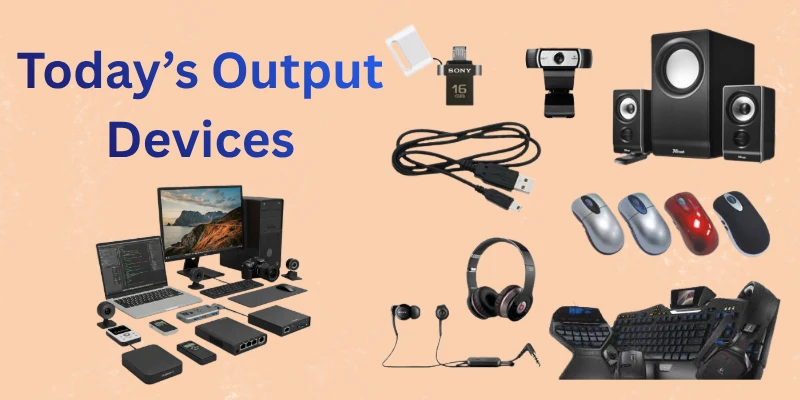
Today’s Output Devices
Modern output devices have transformed how we interact with computers and digital content. Today, screens are sharper, printers are faster, and immersive technologies bring experiences closer than ever before.
Users can now enjoy clear visuals, high-quality sound, and intuitive interfaces that adapt to their needs. Each device is designed to improve productivity, entertainment, and communication in everyday life.
Let’s explore the main types of output devices shaping our world right now.
- LED and LCD Monitors: Provide crisp, high-resolution visuals with adjustable brightness and energy-efficient performance for work, gaming, and multimedia.
- Laser and Inkjet Printers: Deliver fast, high-quality prints of documents and images, offering reliability and precision for personal and office use.
- Projectors and Smart Boards: Enable large-scale display of presentations, videos, and interactive lessons for classrooms and meetings.
- Speakers and Sound Systems: Produce clear, immersive audio for music, video, and communication applications, enhancing user experience.
- VR Headsets and AR Glasses: Create immersive virtual and augmented environments, allowing users to explore games, design projects, and simulations.
- Touchscreen Displays: Allow direct interaction with devices, making navigation and control simple and intuitive across laptops, tablets, and kiosks.
- Headphones and Earbuds: Provide personal, high-quality sound for listening, gaming, or remote communication without disturbing others.
- Multifunction Devices: Combine printing, scanning, and display capabilities in one system, saving space while improving productivity and efficiency.
Output Devices in the Future
Technology continues to grow at a rapid speed, and output devices are evolving along with it. In the coming years, devices will become more interactive, intelligent, and deeply connected to our daily routines.
Future systems will not just display information; they will respond, adapt, and even predict user needs. Companies already test advanced prototypes, and early versions are entering the market. Let’s explore the expected timeline of future output devices.
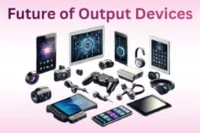
See what output devices may look like in the coming decades.
- 2025 to 2030 Smart Displays: Manufacturers will introduce flexible and foldable screens that expand for better viewing while staying compact and portable.
- 2026 to 2032 Holographic Projection: Developers will launch display systems that project 3D visuals into open space without requiring physical screens.
- 2025 to 2035 Adaptive Audio Systems: Engineers will design sound devices that adjust automatically based on room size, user position, and activity.
- 2027 to 2035 Advanced AR Glasses: Companies will release lightweight glasses that overlay digital content directly onto real-world surroundings.
- 2030 to 2040 Brain Computer Interfaces: Researchers will improve systems that allow users to control digital output through neural signals.
- 2028 to 2038 Gesture-Based Controls: Designers will create devices that respond to hand movements and body gestures without touch.
- 2025 to 2035 Sustainable Output Devices: Manufacturers will focus on eco-friendly materials and low energy consumption to reduce environmental impact.
- 2035 and Beyond Immersive Environments: Technology firms will develop fully interactive digital spaces that blend physical and virtual experiences seamlessly.
- 2026 to 2034 AI-Powered Personal Displays: Devices will analyze user habits and preferences to customize visuals, notifications, and performance automatically.
- 2028 to 2040 Multi-Sensory Interfaces: Output systems will combine sight, sound, and touch feedback to make digital interaction feel more real and intuitive
Key Factors Shaping Future Output Devices
The future of output devices develops through several powerful influences that guide innovation and design. Companies study user behavior, market trends, and technical progress to build better systems. Developers focus on solving real-world challenges while improving overall performance. These driving forces determine how devices will look, function, and serve users in the coming years.
- Technological Advancements: Rapid progress in materials, displays, and audio systems enables smarter and more interactive devices.
- User-Centric Design: Focusing on comfort, accessibility, and intuitive interfaces makes devices easier to use.
- Energy Efficiency: Low-power components extend device lifespan while reducing electricity consumption.
- Environmental Sustainability: Eco-friendly materials and recycling-friendly designs minimize environmental impact.
- Connectivity and Integration: Devices seamlessly connect with other systems, smart homes, and IoT platforms.
- Customization and Personalization: Devices adapt to user preferences, display settings, and audio profiles.
- Immersive Experiences: Visuals, spatial sound, and haptic feedback create realistic multi-sensory interaction.
- Cost Accessibility: Advanced output devices are becoming more affordable for a wider audience globally.
How Future Output Devices Will Transform Industries
Future output devices will change how industries deliver services and interact with customers. Companies will rely on advanced visual systems, responsive audio tools, and immersive environments to improve efficiency and accuracy.
These developments will support better decision-making and smoother workflows. As technology advances, industries will discover new ways to enhance productivity and user experience. Let’s explore how different sectors will benefit from these advancements.
See how future output devices will reshape major industries.
- Healthcare Advancement: Medical teams will use real-time 3D visualization and precision display systems to support diagnosis, surgical procedures, and remote treatment monitoring.
- Education Transformation: Institutions will implement immersive learning walls and interactive projection systems to create practical and engaging classroom experiences.
- Manufacturing Optimization: Production units will depend on intelligent visual dashboards and automated output alerts to maintain quality control and reduce downtime.
- Retail Modernization: Stores will integrate interactive digital shelves and personalized display systems to guide customers and improve purchase decisions.
- Media and Entertainment Growth: Studios will adopt advanced visual rendering and spatial audio technologies to produce lifelike viewing and listening experiences.
- Corporate Collaboration: Organizations will conduct immersive virtual meetings and dynamic data presentations to strengthen global teamwork.
- Engineering and Construction: Professionals will rely on high-precision modeling displays to review structural designs and detect planning errors before execution.
- Smart City Development: Urban systems will deploy adaptive public information screens and traffic guidance displays to improve safety and mobility.
Benefits of Future Output Devices
Future output devices will redefine how people interact with digital systems in daily life. These technologies will influence work environments, learning spaces, and entertainment platforms in powerful ways.
Developers continue to focus on creating devices that feel seamless, reliable, and adaptable. As innovation accelerates, users will notice meaningful improvements across many aspects of digital experience.
Let’s see how future output devices improve digital experiences.
- Sharper Display Quality: Advanced screens will present content with higher resolution and better color accuracy, improving viewing comfort and precision.
- Seamless Device Integration: Future systems will connect smoothly with other smart technologies, creating a unified and efficient digital setup.
- Natural Response Systems: Devices will react instantly to voice, gesture, and movement, reducing effort during interaction.
- Adaptive Accessibility Features: Output tools will adjust brightness, sound levels, and display formats to meet individual user requirements.
- Streamlined Workflows: Professionals will manage data and presentations more effectively through organized and responsive output systems.
- Reduced Power Consumption: Energy-efficient components will lower electricity usage and support longer device operation.
- Immersive Media Output: Advanced visual and sound systems will deliver deeper engagement in games, films, and virtual experiences.
- Reliable Remote Collaboration: High-quality audio and visual transmission will strengthen communication across global teams.
Risks and Challenges of Future Output Devices
Future output devices bring exciting opportunities, but they also present challenges that users and industries must consider. These devices rely on new technologies, which may require careful handling, training, and planning. Organizations must understand potential obstacles before adopting them fully. By recognizing these challenges early, users can avoid problems and maximize benefits.
Let’s see the main drawbacks of future output devices.
- Rising Equipment Costs: Cutting-edge output devices often involve expensive materials and advanced manufacturing processes, making them costly for individuals and organizations.
- Complex Technical Requirements: Many devices demand advanced software, hardware compatibility, and skilled handling to operate correctly.
- Integration Difficulties: New systems may not connect easily with existing equipment, leading to workflow interruptions and extra setup time.
- Data Privacy Risks: Devices that store or transmit information can be vulnerable to unauthorized access, breaches, or misuse.
- Environmental Concerns: High-tech materials and electronic waste from production or disposal can increase environmental impact.
- Learning Curve Challenges: Users may require time, guidance, or training to use new interaction methods, immersive systems, or advanced controls effectively.
- Maintenance Demands: Devices may need frequent updates, calibration, or repairs to function optimally, which can be time-consuming.
- Dependence on Technology: Relying heavily on sophisticated output devices can reduce manual problem-solving skills or cause disruptions if devices fail unexpectedly.
How Society Can Prepare for the Future of Output Devices
As output devices advance, society will experience new possibilities and challenges. These changes will influence work, education, and everyday life in significant ways. Communities and organizations can take proactive steps to adapt and stay ahead. By preparing thoughtfully, people can fully benefit from emerging technologies.
Let’s see how society can prepare for the future of output devices.
- Invest in Education: Schools and training programs should introduce students and employees to modern output devices, helping them gain hands-on experience early.
- Promote Digital Literacy: Communities must teach people how to navigate, operate, and troubleshoot interactive displays, immersive systems, and audio technologies.
- Encourage Accessibility: Devices should be designed to accommodate all users, including those with disabilities or special requirements, ensuring equal access.
- Support Lifelong Learning: Professionals need continuous training to stay updated on emerging output technologies and best practices for using them effectively.
- Plan Infrastructure Upgrades: Organizations should improve networks, workstations, and public facilities to handle future output devices efficiently.
- Adopt Sustainability Practices: Communities can reduce environmental impact by prioritizing energy efficiency, recycling, and eco-friendly materials during device implementation.
- Foster Innovation Culture: Encouraging experimentation with new output devices can help industries and individuals discover creative solutions and better workflows.
- Strengthen Security Awareness: Users must understand data privacy, safe device usage, and protective measures for devices connected to networks.
- Promote Collaboration and Sharing: Organizations and communities can exchange knowledge, resources, and strategies to accelerate adoption and ensure broad access to technology.
Conclusion
In this guide, we have covered the future of output devices. These advanced devices can improve work, learning, and entertainment, but they also have potential risks and challenges. My personal suggestion is to balance excitement with caution: adopt devices gradually, train users well, and always consider safety and sustainability. By doing this, society can gain the most while staying safe.
Thank you very much for spending time here; I truly appreciate it. Don’t skip the next part of the FAQs. I hope you will find something more interesting, so don’t miss it. If you miss it, you may lose something new.
FAQS: Future of Output Devices
Let’s see the most common questions about the future of output devices and find easy answers for each.
Output devices are tools that display or deliver information from a computer, such as screens, printers, or speakers. They are important because they help users see, hear, or interact with data. Without them, computers would not communicate results effectively.
Future output devices will make workspaces more interactive and efficient. Smart monitors, holographic displays, and immersive screens will improve collaboration and data visualization. Employees will complete tasks faster and with more accuracy.
Virtual Reality (VR) and Augmented Reality (AR) will create immersive, interactive environments. Users can experience digital content as if it were real, which is useful in education, gaming, and design. AR overlays real-world views with digital info, while VR creates fully digital worlds. Both technologies will make output devices more engaging and practical.
Yes, developers are creating output devices that consume less power. New screens, speakers, and printers focus on energy-saving features. This reduces electricity costs and environmental impact. Users can enjoy advanced technology while being more sustainable.
Yes, hospitals will use advanced displays for imaging and monitoring patients. Real-time data and 3D visualization improve diagnosis and treatment. Doctors can work more accurately, and patients get faster care. Remote consultations also become easier with better output devices.
Modern devices connect through USB, Bluetooth, Wi-Fi, or cloud networks. Future devices will integrate with IoT, smart homes, and other systems. This allows seamless communication and data sharing. Users can control multiple devices efficiently.
Yes, new devices will include adaptive features like voice output and adjustable displays. People with visual, hearing, or mobility challenges will interact more easily. Accessibility ensures that everyone can benefit from technology. These improvements promote inclusive use for all users.
Technology for output devices is evolving rapidly. New displays, immersive systems, and audio devices appear every few years. Users can expect regular improvements in performance, clarity, and functionality. Staying updated helps people use technology effectively.


- Be Respectful
- Stay Relevant
- Stay Positive
- True Feedback
- Encourage Discussion
- Avoid Spamming
- No Fake News
- Don't Copy-Paste
- No Personal Attacks
- Be Respectful
- Stay Relevant
- Stay Positive
- True Feedback
- Encourage Discussion
- Avoid Spamming
- No Fake News
- Don't Copy-Paste
- No Personal Attacks
