Future of Input Devices Surprising Changes You Should Know
Published: 3 Mar 2026
Why do we still use keyboards and mice when phones and computers can listen to our voices or respond to gestures? The future of input devices is full of surprises, and it can feel confusing at times. Every day, new tools like gesture controls, smart touch surfaces, and voice assistants are changing how we interact with technology.
In this article, we have covered the latest trends, innovations, and practical examples of how these devices will make work, learning, and daily tasks easier. Understanding these changes now will help you use technology smarter and stay ahead in a world that is moving faster than ever.
Let’s jump into the article and explore how the future of input devices will change the way we work, learn, and interact with technology every day. Stay with me.
Evolution of Input Devices (Past → Present → Future)
Input devices have changed a lot over the years. From bulky keyboards and simple mice to touchscreens and voice controls, every step shows how technology adapts to our needs. It’s fascinating to see how these tools evolved and how they shape the way we work and play today.
Let’s explore the journey of input devices and see what the future holds.
History of Input Devices
Input devices have developed gradually over many decades. In the beginning, people used very basic ways to interact with computers. Each new invention made work faster and communication smoother. From early mechanical approaches to modern voice and touch methods, humans have always sought easier ways to control machines.
Let’s explore the timeline and see how each innovation shaped computing.
- 1940s – Punch Cards: Users relied on punched cards to store and enter data, which required careful planning and accuracy to make computers process information correctly.
- 1950s—Mechanical Switches: Early computers were operated using switches and levers, demanding precise hand movements and full attention for each task.
- 1960s—Standard Keyboards: QWERTY keyboards became widely adopted, enabling people to type faster and interact with machines more efficiently and reliably.
- 1970s – Trackballs and Joysticks: These tools offered alternative ways to move cursors, improving navigation for games, simulations, and graphical work.
- 1980s—Optical Mice: Optical mice replaced older ball-based mice, giving smoother movement and faster response on screens, making tasks easier to manage.
- 1990s – Touchscreens: Touchscreen technology allowed users to interact directly with displays, reducing the need for separate hardware and creating a more natural experience.
- 2000s – Stylus Pens: Styluses provided precise control for writing, drawing, and design tasks, making digital work more accurate and professional.
- 2010s—Voice Input Systems: Voice-controlled systems enabled hands-free operation, helping users complete tasks faster and offering accessibility for those with physical limitations.
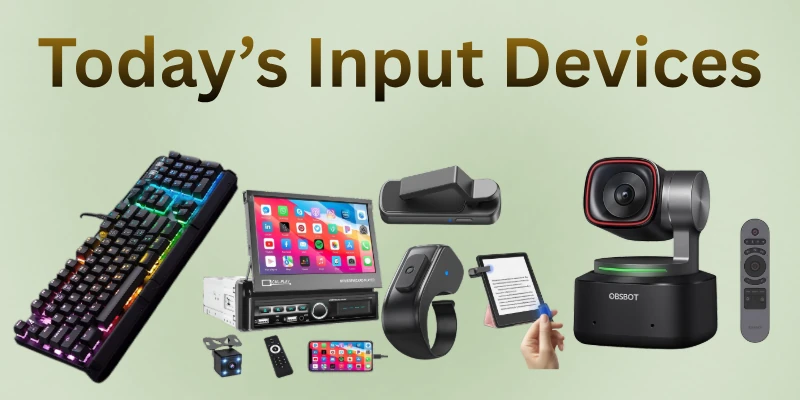
Today’s Input Devices
Today’s input devices are smarter and more interactive than ever before. People no longer rely only on keyboards and mice to communicate with their devices. Touchscreens, styluses, and voice systems let users interact naturally and efficiently.
Gaming, designing, and learning have become easier with precise control tools. Modern sensors and wearable devices track gestures and movement, making interaction faster and more engaging. Every new device focuses on improving speed, accuracy, and comfort for users in daily life.
Let’s explore the most popular and widely used input devices of today.
- Touchscreens Everywhere: Smartphones, tablets, and even laptops use touchscreens to allow direct interaction, making typing, scrolling, and navigation fast and intuitive.
- Modern Keyboards: Ergonomic and wireless keyboards improve typing speed and reduce strain during long work sessions, supporting efficiency in offices and homes.
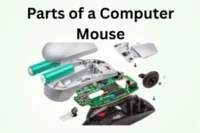
- Advanced Mice: Optical and wireless mice provide smooth and accurate control, helping gamers, designers, and professionals perform tasks with precision.
- Stylus Pens: Digital pens give precise control for drawing, note-taking, and creative design, making detailed work on tablets and touchscreen laptops easier.
- Voice Recognition Devices: Microphones and voice systems convert spoken words into commands, letting users perform tasks hands-free and multitask efficiently.
- Gesture Control Sensors: Motion sensors track hand or body movements, enabling touchless control in gaming, presentations, and interactive learning.
- Wearable Input Devices: Smartwatches and fitness trackers allow quick inputs and commands, keeping users connected without relying on traditional devices.
- Game Controllers and Joysticks: Modern controllers provide responsive and ergonomic input for immersive gaming, simulations, and professional training software.
Input Devices in the Future
Imagine a world where devices can understand your gestures, thoughts, and emotions. The next generation of input tools will make interaction hands-free, immersive, and intuitive. Flexible touchscreens will wrap around objects, while wearable gloves and rings let you control technology seamlessly.
Brain-computer interfaces will allow direct control with your mind, and AR controllers will let users manipulate 3D objects effortlessly. Haptic feedback and predictive systems will make devices feel smarter and more responsive. Future input devices aim to make every interaction faster, easier, and closer to natural human movement.
Let’s discover the groundbreaking input devices that will shape our future.
- Flexible Touchscreens: Screens will bend, fold, and wrap around objects, allowing users to interact in more creative and portable ways.
- Brain-Computer Interfaces: Devices will detect brain signals to execute commands directly, making hands-free operation faster and highly precise.
- Advanced Gesture Sensors: Motion-tracking sensors will recognize complex hand and body movements, enabling natural control for work, gaming, and learning.
- Haptic Feedback Tools: Users will feel textures, resistance, and vibrations through devices, creating a more realistic and immersive interaction experience.
- Augmented Reality Controllers: AR input tools will overlay digital controls onto the real world, helping users manipulate 3D objects with ease.
- Wearable Input Devices: Smart gloves, rings, and watches will allow seamless control of devices, letting people operate technology anywhere without traditional hardware.
- Voice and Emotion Recognition: Future microphones and sensors will not only recognize speech but also interpret emotions, enabling devices to respond more intuitively.
- AI-Assisted Predictive Devices: Smart systems will anticipate user actions and suggest commands, reducing effort and making interactions faster and smarter.
Key Factors Shaping Future Input Devices
The way we interact with technology is changing rapidly. New trends, user needs, and advanced research are guiding how future input devices will be designed. Companies focus on speed, accuracy, and comfort to make devices more intuitive.
Innovation in materials, sensors, and software is creating opportunities for touchless and immersive experiences. Users expect devices to understand gestures, voice, and even emotions. All these elements will influence how input tools evolve in the coming years.
Let’s explore the main factors that will shape future input devices.
- User Experience Demands: Designers aim to create devices that are faster, simpler, and more comfortable for prolonged use.
- Advances in Sensors: Improved motion, pressure, and optical sensors allow devices to detect subtle movements and gestures accurately.
- Wearable Technology Growth: Gloves, rings, watches, and other wearables give users hands-free control and more natural interactions.
- Voice and Language Processing: Future devices will understand multiple languages, dialects, and tones to respond accurately to commands.
- Material and Design Innovation: Flexible screens, lightweight materials, and ergonomic shapes make devices more portable and easier to use.
- Integration with Augmented Reality: AR will create new input methods where users interact with digital content in real-world environments.
- Haptic and Sensory Feedback: Devices will provide tactile feedback, vibrations, and resistance to make interactions more realistic and engaging.
- Predictive and Adaptive Systems: Intelligent devices will learn user habits and anticipate actions, reducing effort and improving efficiency.
How Future Input Devices Will Transform Industries
Industries are on the brink of major change because of emerging input technologies. Factories, offices, and creative studios will rely on smarter devices to increase efficiency and accuracy. Employees will interact with machines in more natural ways using gestures, voice, and wearable sensors.
Training and design will become more immersive, while data collection will become faster and more precise. Healthcare, manufacturing, education, and entertainment sectors will experience higher productivity and creativity. The evolution of input devices is not only about convenience; it is about completely changing how industries operate.
Let’s explore the main ways future input devices will change industries.
- Manufacturing Automation: Advanced sensors and wearable controls will streamline assembly lines, enabling workers to operate machines safely and more efficiently.
- Healthcare Advancements: Gesture recognition, touchless controls, and AR interfaces will improve surgical precision, patient monitoring, and remote diagnostics.
- Education and Learning: Interactive touchscreens, haptic tools, and VR/AR input systems will make learning immersive, engaging, and hands-on.
- Creative Design Tools: Stylus pens, motion sensors, and 3D controllers will help designers create detailed models faster and more accurately.
- Remote Collaboration: Gesture sensors and predictive devices will allow teams to interact smoothly across locations in virtual workspaces.
- Entertainment and Gaming: Next-generation controllers, motion capture, and voice interfaces will provide fully immersive gaming and interactive experiences.
- Data Collection and Analysis: Smart devices will record real-time inputs accurately, supporting better decision-making and operational efficiency.
- Workplace Ergonomics: Wearable and adaptive devices will reduce strain and make long work hours safer and more comfortable for employees.
Benefits of Future Input Devices
Future input devices will make working with technology faster and more natural. Users will enjoy easier control through gestures, touch, voice, and even wearable sensors. Devices will adapt to human habits, reducing effort and saving time.
Accessibility will improve, allowing people with different abilities to interact comfortably. Creative and professional tasks will become more precise and efficient. Overall, these devices will enhance productivity, engagement, and convenience in daily life.
- Increased Productivity: Intelligent devices will streamline repetitive tasks and reduce manual input, allowing users to focus on higher-value work.
- Enhanced Accuracy: Advanced sensors and predictive systems will minimize errors in design, data entry, and professional workflows.
- Improved Accessibility: Voice recognition, gesture control, and adaptive tools will make technology usable for people with varying abilities.
- Natural Interaction: Touchless controls, haptic feedback, and gesture-based inputs will make working with devices feel intuitive and effortless.
- Time Efficiency: Devices will anticipate user actions and provide smart shortcuts, helping users complete tasks faster and with less effort.
- Better User Experience: Ergonomic designs, responsive interfaces, and immersive input methods will create a comfortable, enjoyable, and engaging interaction.
Limitations of Future Input Devices
Despite the many advantages, future input devices will face certain challenges. Advanced technology may be expensive, making it difficult for everyone to access. Devices that rely on gestures, voice, or brain signals could struggle in noisy or complex environments.
Users may require training to use new tools efficiently, which can slow adoption. Privacy and data security will become major concerns as devices collect more personal information. Technical glitches and maintenance issues could disrupt productivity and user experience. Understanding these limitations will help industries and users prepare for smarter device integration.
Discover the key challenges that might influence how future input devices work.
- High Cost of Devices: Cutting-edge sensors, wearable tools, and predictive systems will be expensive, limiting widespread adoption.
- Environmental Challenges: Gesture recognition and voice-controlled tools may not work well in noisy or crowded settings, reducing efficiency.
- Learning Curve Issues: Complex interfaces and new input methods will require training, which may slow down user adaptation.
- Privacy Concerns: Devices that track gestures, voice, or biometrics could collect sensitive data, raising security and ethical issues.
- Technical Reliability: Hardware failures, software glitches, or sensor inaccuracies may disrupt workflow and productivity.
- Compatibility Limitations: New input devices may not integrate easily with existing systems, creating challenges for organizations and developers.
How Society Can Prepare for the Future of Input Devices
The arrival of advanced input devices will change how we live, work, and communicate. Society needs to understand these technologies and adapt early to benefit fully. Education, training, and awareness will help people use new tools effectively.
Policies and standards should be developed to protect privacy, security, and accessibility. Communities can embrace technology while ensuring no one is left behind. Preparing now will make the transition smoother and allow people to take full advantage of future innovations.
Here are practical steps society can take to prepare for advanced input devices
- Invest in Education: Schools and training centers should teach students about gesture-based, voice-controlled, and wearable technologies.
- Promote Digital Literacy: Communities must encourage learning about device usage, software tools, and safety practices.
- Develop Policies: Governments and organizations should create rules for privacy, data security, and ethical use of new input devices.
- Encourage Accessibility: Technology must be inclusive, ensuring people with disabilities can use advanced input tools comfortably.
- Support Research and Innovation: Funding for research will drive improvements in sensors, haptics, AR, and adaptive devices.
- Provide Public Awareness Programs: Inform citizens about benefits, limitations, and safe practices when using emerging input technologies.
- Facilitate Workforce Training: Businesses should offer workshops and courses to help employees adapt to new devices efficiently.
- Promote Collaboration: Collaboration between tech developers, educators, and policymakers will ensure responsible adoption and smooth integration.
Conclusion
In this guide, we have covered the past, present, and future of input devices. I personally suggest being careful with potential limitations and risks, such as technical issues or privacy concerns. Managing these challenges with education, safety practices, and smart usage can help you enjoy all the benefits without trouble.
Using devices responsibly ensures a smooth and productive experience. It was a pleasure to share this guide with you, and I hope it helps in your learning journey. Make sure to check the next FAQ section. There is more interesting information waiting for you, so don’t skip it. Missing it might cost you a new insight.
FAQS: Future of Input Devices
Here are the most common questions about the future of input devices, answered clearly to help you better understand them.
Future input devices are advanced tools that allow humans to interact with computers and machines in new ways. They include gesture controls, voice recognition, AR/VR interfaces, and wearable sensors. These devices aim to make interactions faster, more natural, and more efficient. They go beyond traditional keyboards and mice.
Healthcare, manufacturing, education, and gaming will see the biggest benefits. Hospitals will use gesture-controlled surgery tools. Factories will improve efficiency with wearable and sensor-based devices. Education will use immersive AR/VR tools for interactive learning.
Input devices will become more intuitive and adaptive in the next five years. Gesture-based controls, eye-tracking, and brain-computer interfaces will become more popular. Devices will respond more accurately to natural human movements and voice commands. This will make daily computer interactions smoother and faster.
Yes, developers are focusing on safety and accessibility. Ergonomic designs reduce strain, while adaptive technologies help people with disabilities. However, proper usage and training are essential to avoid misuse or fatigue. Privacy and data protection also remain important.
Devices will reduce repetitive tasks, provide predictive controls, and allow faster input methods. Gesture, voice, and adaptive interfaces help users complete tasks efficiently. Workflows become smoother in offices, factories, and creative industries. This saves time and improves overall productivity.
Compatibility is a key goal for developers. Most devices aim to support multiple platforms through software updates or universal drivers. However, some advanced tools may require specific systems. Users should check compatibility before purchasing.
Yes, wearables like gloves, rings, and smart watches provide ergonomic controls. They reduce strain compared to traditional input methods. They allow hands-free interaction in many situations. Comfort and efficiency improve simultaneously.
Absolutely. Voice recognition, gesture sensors, and eye-tracking devices improve accessibility. They allow users with physical or visual challenges to interact naturally. Adaptive tools make technology inclusive. This empowers all users to participate equally.
The outlook is promising, with ongoing research in AI, sensors, and wearable tech. Devices will become more intelligent, adaptive, and accessible. Industries, education, and everyday users will benefit. Continuous innovation will shape the next generation of input tools.


- Be Respectful
- Stay Relevant
- Stay Positive
- True Feedback
- Encourage Discussion
- Avoid Spamming
- No Fake News
- Don't Copy-Paste
- No Personal Attacks
- Be Respectful
- Stay Relevant
- Stay Positive
- True Feedback
- Encourage Discussion
- Avoid Spamming
- No Fake News
- Don't Copy-Paste
- No Personal Attacks
